
Ethan had a fairly busy week. Here’s what happened…
One of the challenges again this week was computer time. Specifically, Ethan is given a set amount of time for computer usage that’s not related to research, writing, math or anything related to academics. However, he has often ignored the timer or will continue until we say something to him. This has resulted in lost computer privileges for those activities, which include playing games and coding. We’d like him to spend more time reading, as opposed to screen time because he has plenty of screen time already, in our opinion. Managing time on the computer is something we’ll continue to work on together.
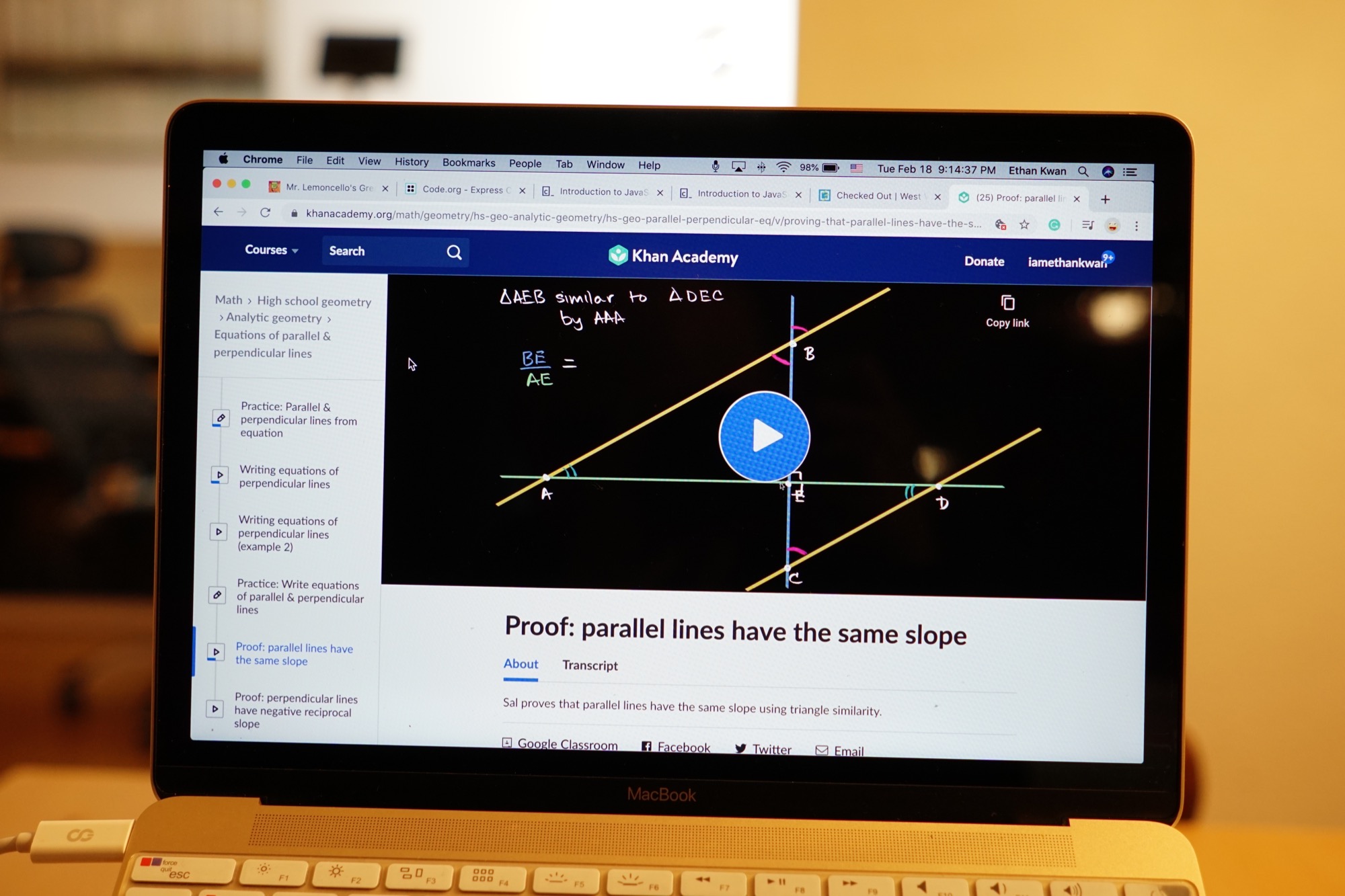
Ethan also tried some math quizzes this week to test his knowledge. It’s been good for us to gauge how well he understands what he’s been learning. He also seems to be enjoying the quizzes and seems motivated to improve his scores because they demonstrate his knowledge of the topic.
February 16



February 17


February 18


February 19
After nature school, Ethan had his 3D architecture and sculpture class. He seems to be really enjoying the class because he likes the teacher and the other kids. He said they’re fun to be around.

February 20


February 21


February 22


Ethan watched the Tintin movie on Netflix after dinner. He said he really enjoyed it, as it was based off a Tintin book called “The Secret of the Unicorn,” which he has read. He’s hoping they’ll make a sequel because there’s a part 2 to the book.
Hello Ethan!!
I have collected a few articles of interest for you to read. I was so excited to see that at UBC PHD student has found new planets! I feel like someday I will be scrolling through the newspapers online and see your discovery in space some day.
UBC student discovers 17 new planets, including potentially habitable, Earth-sized world
SCIENCE, HEALTH & TECHNOLOGY
Feb 28, 2020 | For more information, contact Sachi Wickramasinghe
University of British Columbia astronomy student Michelle Kunimoto has discovered 17 new planets, including a potentially habitable, Earth-sized world, by combing through data gathered by NASA’s Kepler mission.
Over its original four-year mission, the Kepler satellite looked for planets, especially those that lie in the “Habitable Zones” of their stars, where liquid water could exist on a rocky planet’s surface.
The new findings, published in The Astronomical Journal, include one such particularly rare planet. Officially named KIC-7340288 b, the planet discovered by Kunimoto is just 1 ½ times the size of Earth – small enough to be considered rocky, instead of gaseous like the giant planets of the Solar System – and in the habitable zone of its star.
“This planet is about a thousand light years away, so we’re not getting there anytime soon!” said Kunimoto, a PhD candidate in the department of physics and astronomy. “But this is a really exciting find, since there have only been 15 small, confirmed planets in the Habitable Zone found in Kepler data so far.”
You might have seen this explosive news this week:
https://www.bbc.com/news/science-environment-51669384
Scientists detect biggest explosion since Big Bang
Now I know you have been learning more about fractals. Here are some more resources to check out.

“Fractals are some of the most beautiful and most bizarre geometric shapes. They look the same at various different scales – you can take a small extract of the shape and it looks the same as the entire shape. This curious property is called self-similarity. To create a fractal, you can start with a simple pattern and repeat it at smaller scales, again and again, forever. In real life, of course, it is impossible to draw fractals with “infinitely small” patterns. However, we can draw shapes which look just like fractals. Using mathematics, we can think about the properties a real fractal would have – and these are very surprising.” You can learn more about fractals and dimensions at Mathigon.
You might also be interested in exploring Alice in Fractal Land for some serious fractal fun!
After nature school, Ethan had his 3D architecture and sculpture class. He seems to be really enjoying the class because he likes the teacher and the other kids. He said they’re fun to be around.
Great to hear you are enjoying this new 3D sculpture class. New teacher and friends!
I found these engineering challenges. I wonder if you will be doing some of these in the class or you can try some at home:
So many very cool math-design-art related resources to check out. Who knows you might even get inspired to learn how to crochet. Click here to find out why: https://library.sdlc.selfdesign.org/content-collection/math-art-3d/


https://www.mentalfloss.com/article/86016/6-math-concepts-explained-knitting-and-crochet
Or look at the Shape and Space LE: I think there is a lot there you will find interesting. I posted a few videos below too.
https://selfdesign.learning.powerschool.com/selfdesignlearning/library/cms_page/view/36931639
Nicely done on your wormhole and Railgun blogs! They are engaging to read and I am wondering what the catch is for the railgun….
Do you think wormholes are possible?
Do you think there may be parallel universes?
I want to know.
One of the challenges again this week was computer time. Specifically, Ethan is given a set amount of time for computer usage that’s not related to research, writing, math or anything related to academics. However, he has often ignored the timer or will continue until we say something to him. This has resulted in lost computer privileges for those activities, which include playing games and coding. We’d like him to spend more time reading, as opposed to screen time because he has plenty of screen time already, in our opinion. Managing time on the computer is something we’ll continue to work on together.
Ethan what strategies do you think work best to support you in managing your screentime?
Ethan also tried some math quizzes this week to test his knowledge. It’s been good for us to gauge how well he understands what he’s been learning. He also seems to be enjoying the quizzes and seems motivated to improve his scores because they demonstrate his knowledge of the topic.
I am glad to see he is using quizzes as a way to test and assess his knowledge and fluency with math concepts.
Another way is for him to design his own quizzes on topics….
Trees are not the only fractals in nature, show your dad these:


for most of human history, we thought space was a stage, and the planets and stars were just actors. then Einstien came walking along and said “WRONG!” and he made space more like a water bed. the old stage would be hardwood. this space can:
A.bend
B.torn
C.patched together
we don’t know if C is actually true, but we know a and be are true. if C is true, that could make WORMHOLES possible. a wormhole is a portal/mode of travel/a way to travel the universe faster than the speed of light. http://cse.ssl.berkeley.edu/bmendez/html/time.html
the first wormholes that were theorized were…
Einstein Rosen Bridges
they basically say that every black hole in the universe is a wormhole. there may be no singularity (a singularity is an infinitely dense point in space where all the mass of a black hole is concentrated.)! the other side could look like our universe, but with reversed time! cool! in our universe, the black hole might be sucking things in. in the parallel universe, the “white hole” might be spitting things out!
the end(for now)
okay, so if you’re like most of my readers, you are wondering how we are going to get those mirrors into orbit around the sun. well, we will use…
a Railgun!
to launch stuff into space. it will be an electromagnetic track that launches our satellites at high speeds. our satellites will be packed tight for launch, unfurling like a big origami once in orbit. https://techcrunch.com/2019/07/23/watch-crowdfunded-spacecraft-lightsail-2-unfurl-its-solar-sail-live/
from this point, we can take advantage of exponential growth. each panel works together to build another. those two work together to build the next two, 4 become 8, 8 become 16, and so on. within just 60 doubling times, we will have enough mirrors surrounding the sun!if each panel took a month to build, we could be done in a decade! even collecting 1% of the suns energy will exceed the earth’s energy budget many times over! this could be vety good. the catch? (there is always a catch.) well, that’s for pt 4…
Recent Comments