

This week, I went to taekwondo and violin class. I didn’t start swimming yet, but I’ll probably start in September. Other than that, I worked on math (where I learned how to solve separable differential equations) and science (where I learned about the fundamental particles and even made a poster about them)! Also, I did a little bit of coding about grids (like the Game of Life) and sand simulations (like TPT (The Powder Toy (Which is a powdery physics sandbox game (why are there so many brackets (OMG (Oh My God (I should really stop (Ok that’s enough (I’ll stop now))))))))). I also made art for a game/simulation called “Cell Machine Mystic Mod,” which is half puzzle game, half sandbox, and 100% cellular automata.

Here I am making art for the Cell Machine game. There are types of cells: Immobile (which can’t be moved), pusher (it pushes things), push (it gets pushed), slide (it gets pushed, but only in one direction), generator (duplicates the cell behind it), rotator (it rotates cells next to it), and enemy (the bad bois >:(). So I tried making art for each of those cells, and it worked really well! I even made it downloadable, and I gave a tutorial on my YouTube channel! Find it here: https://www.youtube.com/watch?v=3NzYxwzvoFY 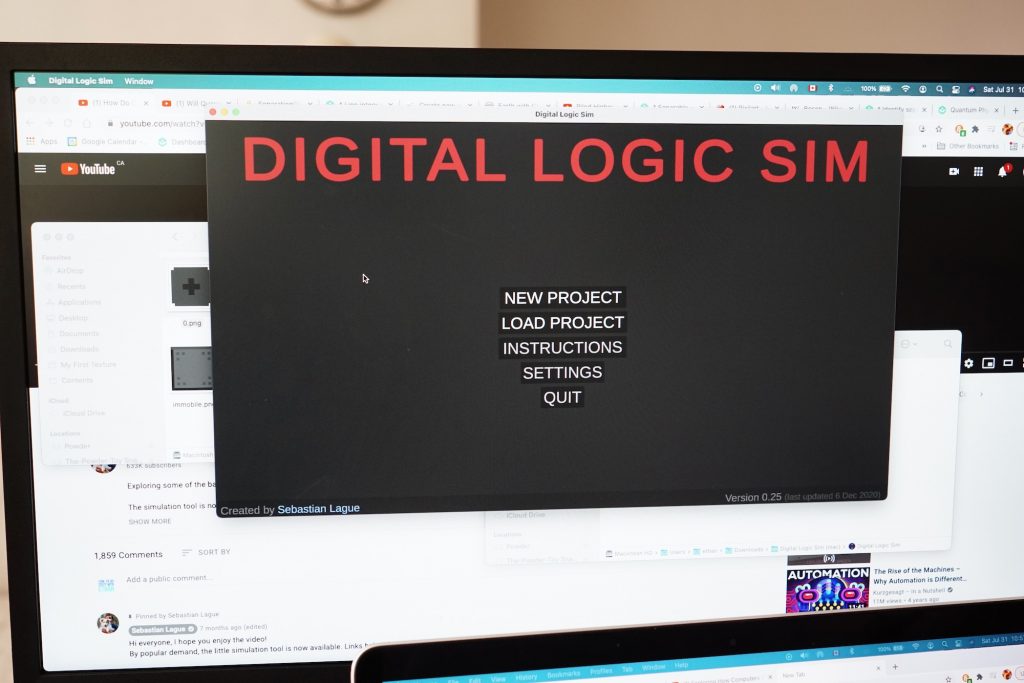
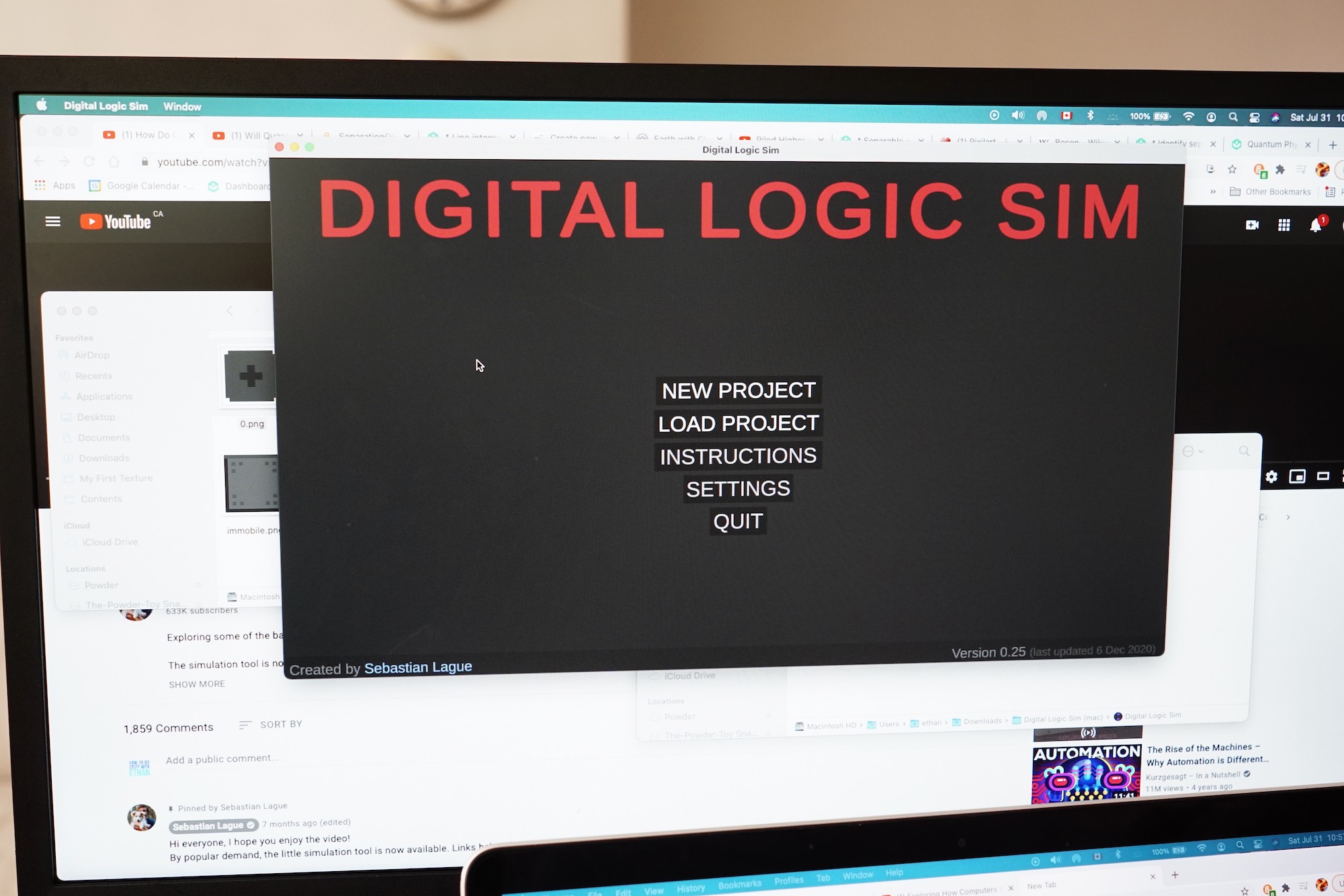
I played with a computer simulation! It’s called “Digital Logic Sim,” where you start with two logic gates, the AND gate (which outputs 1 if both of the inputs are 1) and the NOT gate (which basically reverses the signal coming in). From that, you need to create a lot of other logic machines, the most simple being a NAND gate, which is a Not and an AND gate combined. One of the more complex is shown down below. 
This adds two numbers together, sometimes called an ALU (Arithmetic Logic Unit) and it can also subtract! 
Here is a video explaining how each component of a computer works. The applet I’m using to make all of these gates and stuff came from this video and I downloaded it from a link in this video. 
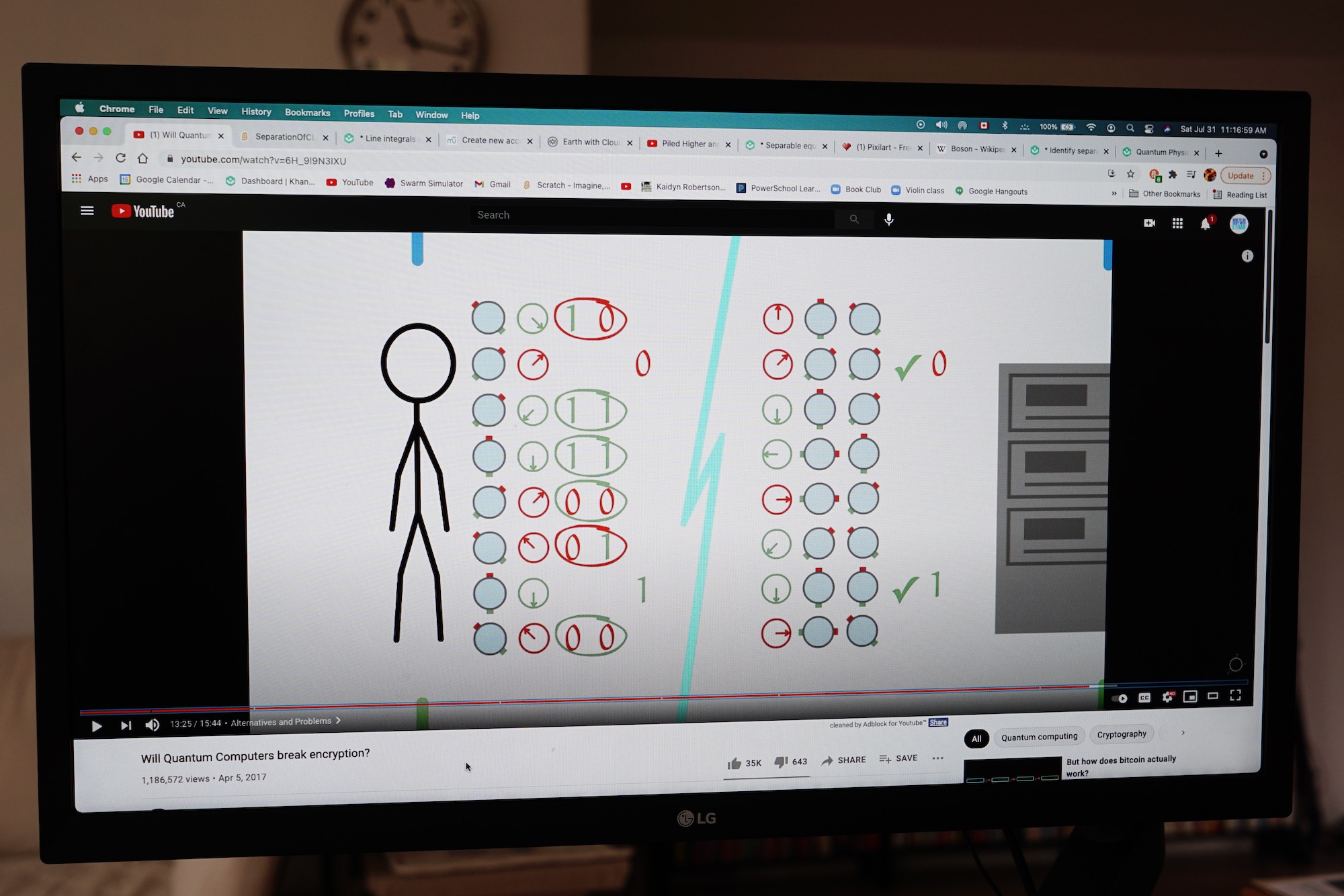
I learned about how quantum computers could break the current security system (which relies on a secret number) and then repair it (which relies on the fact that you can send quantum bits through the internet). 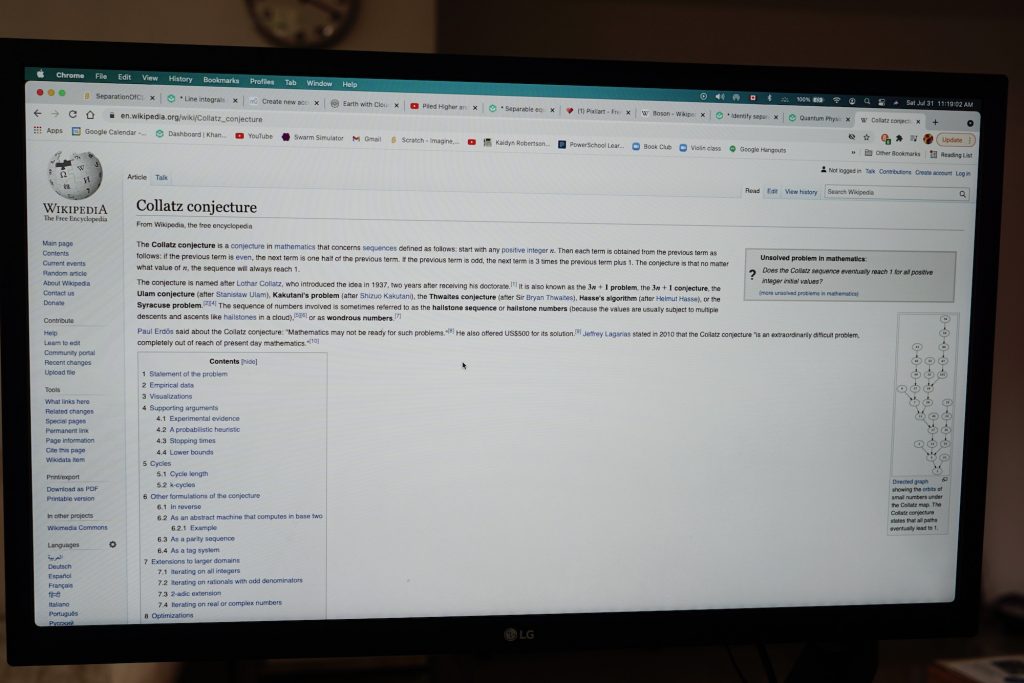
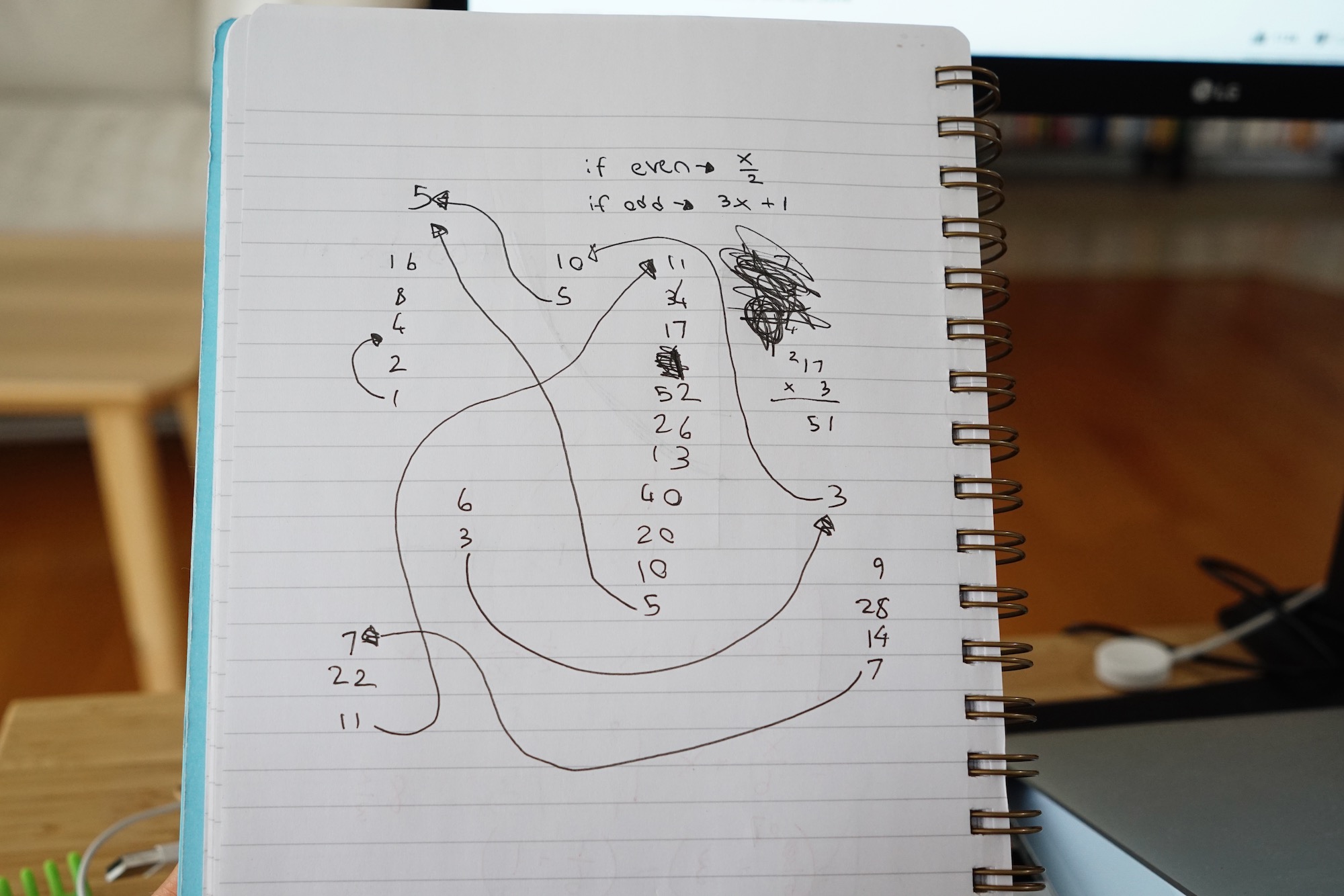
I found a video about the Collatz Conjecture (it was in my recommended videos) and how it might never be solved. Here is the basic idea:
Pick a number, any number.
If that number is odd, multiply it by three and add one.
If it’s even, divide it by two.
So for example, 5 is odd, so that becomes 5*3+1 = 16.
Now 16 is even, so divide by 2. 16/2 = 8.
8/2 = 4
4/2 = 2
2/2 = 1
Now 1 is odd, so 1*3+1 = 4.
But we already did 4!
So the conjecture (basically a theory) is that any number you pick will end up at 1.
Now, this is surprisingly hard to prove! The best way that mathematicians have found so far is to basically literally just check every number. And this is going pretty well, and they have checked over 2.95×10^20 numbers, and all of them follow this rule. 
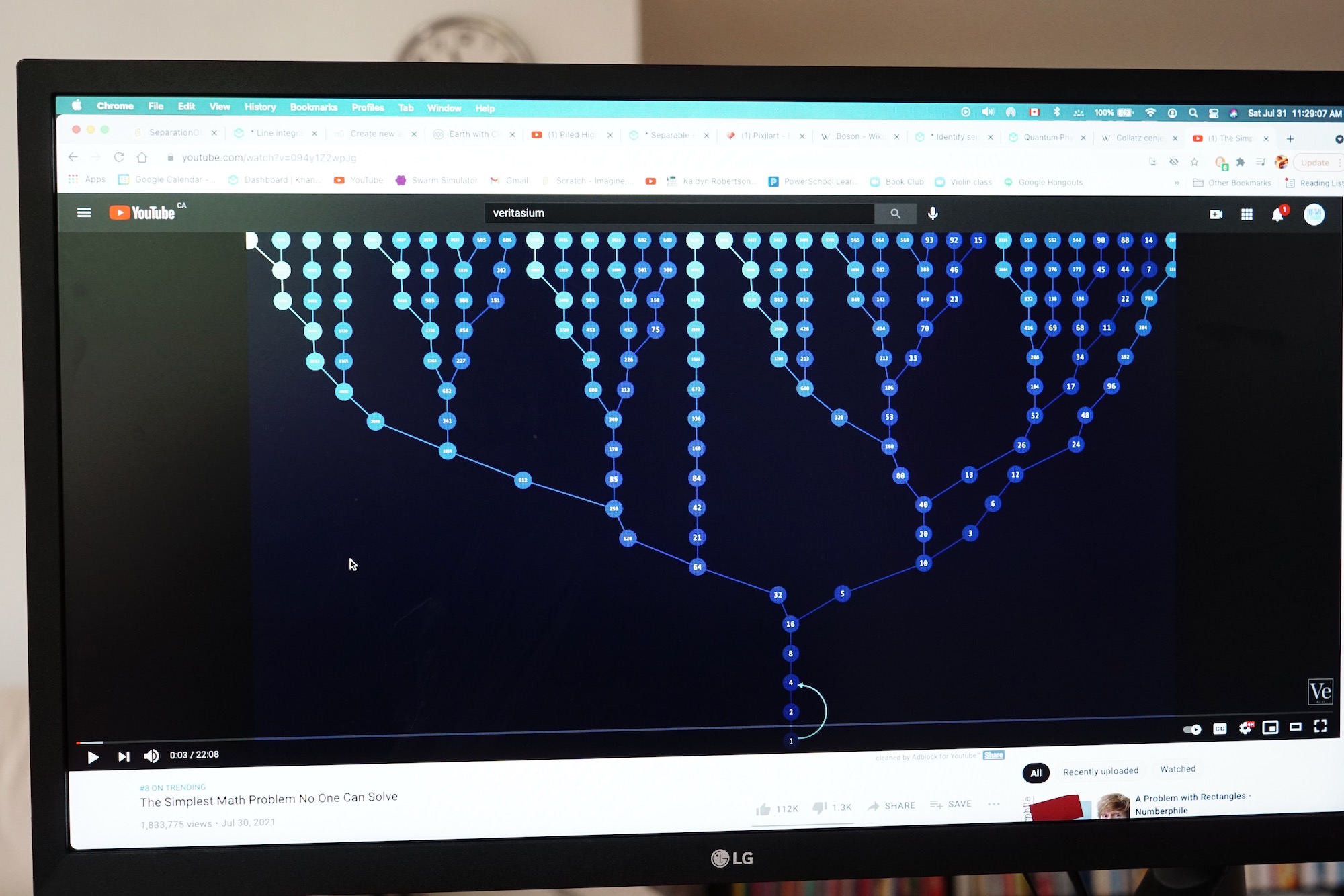
Here is that original video, the tree that you see is a drawing of the Collatz Conjecture, where if you go down on the tree, you’re applying the 3x+1 rule. 
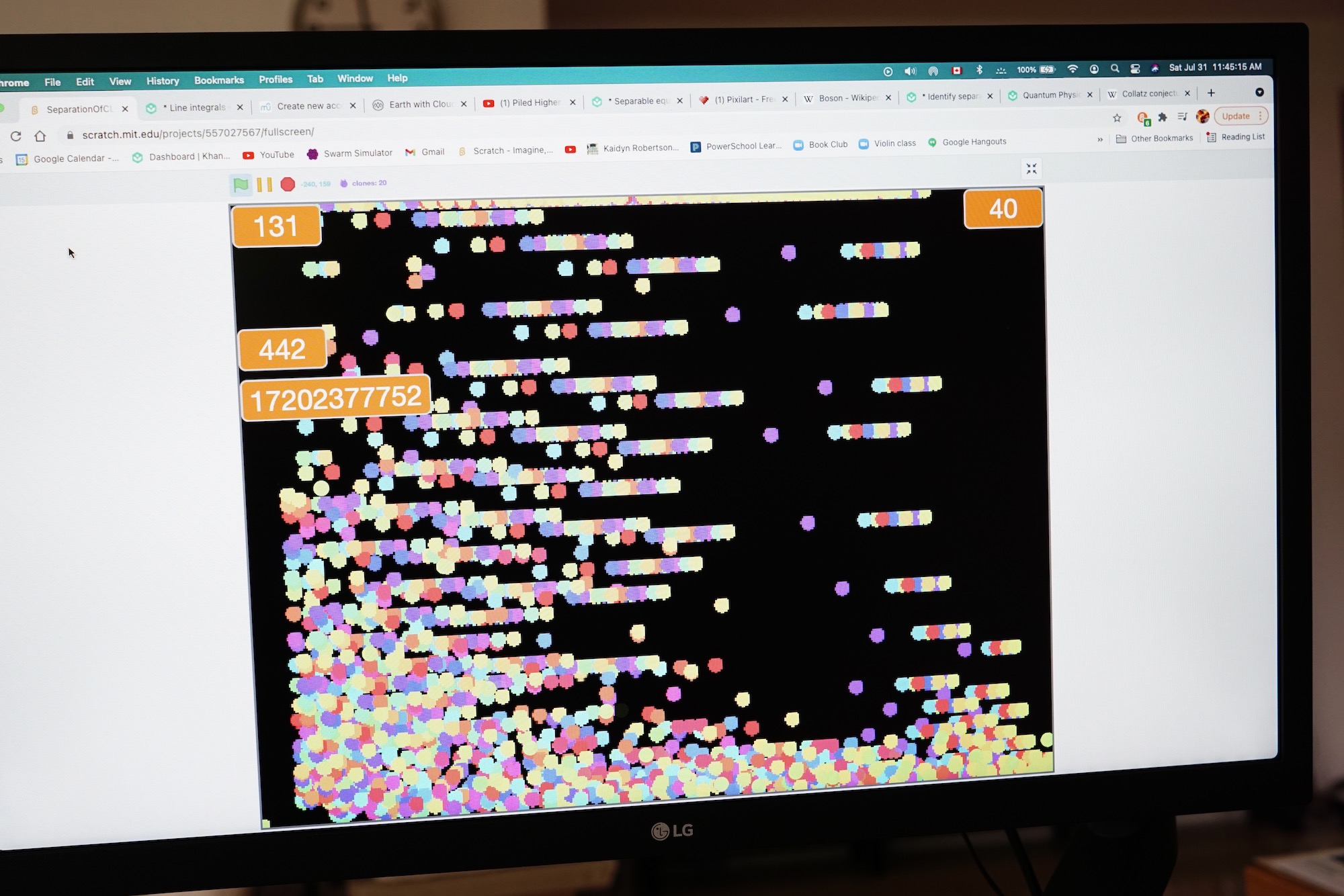
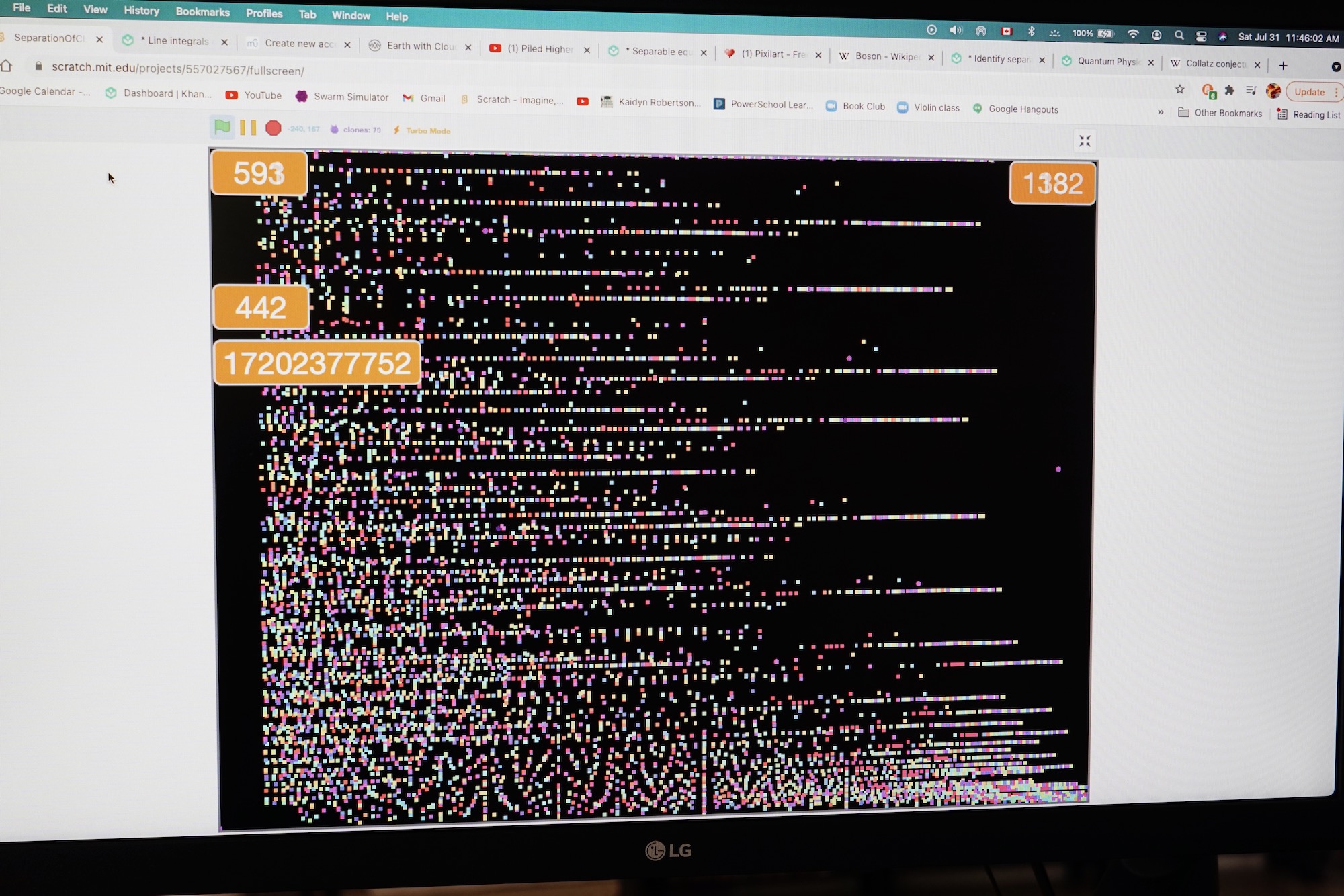
I made my own simulation of the Collatz Conjecture! This simulation basically plots how high each number goes while it does the 3x+1 rule. This was made with Scratch, which was actually pretty difficult because I needed to learn how to space out the dots horizontally. 
Here it is after running for about 30 minutes. The lines represent that a lot of numbers landed on that value! 

Here it is after running for another 30 minutes. 
I learned about line integrals, which is actually pretty hard, and I don’t really understand it either, so I’m gonna learn about it again next week. 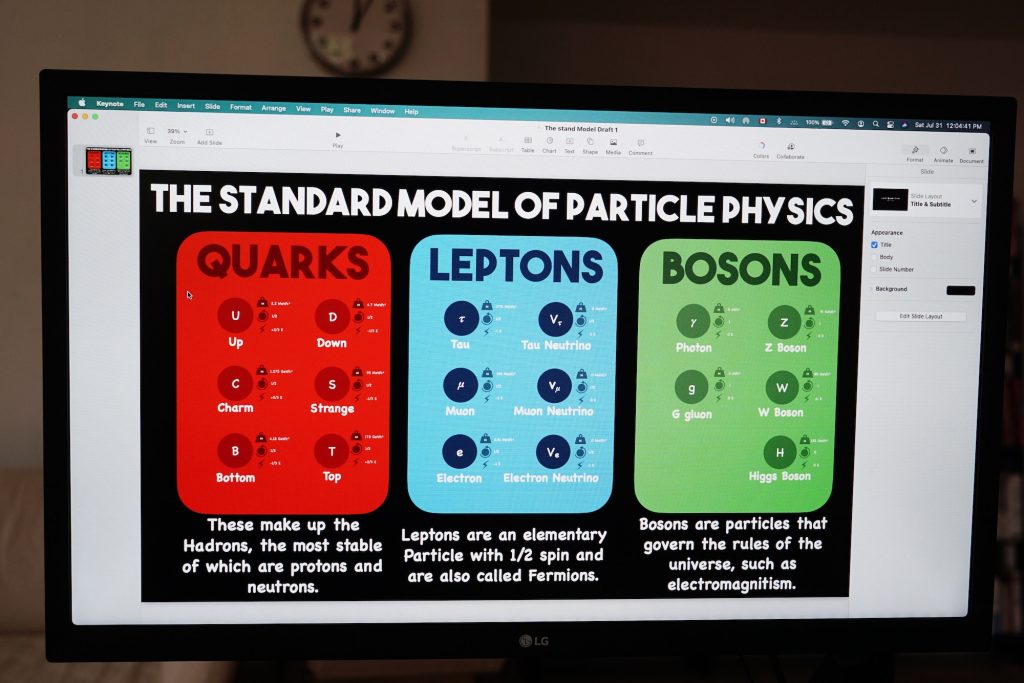
Here is a poster I made about the Standard Model of Particle Physics, which is basically a periodic table of all the fundamental particles and what properties they have. 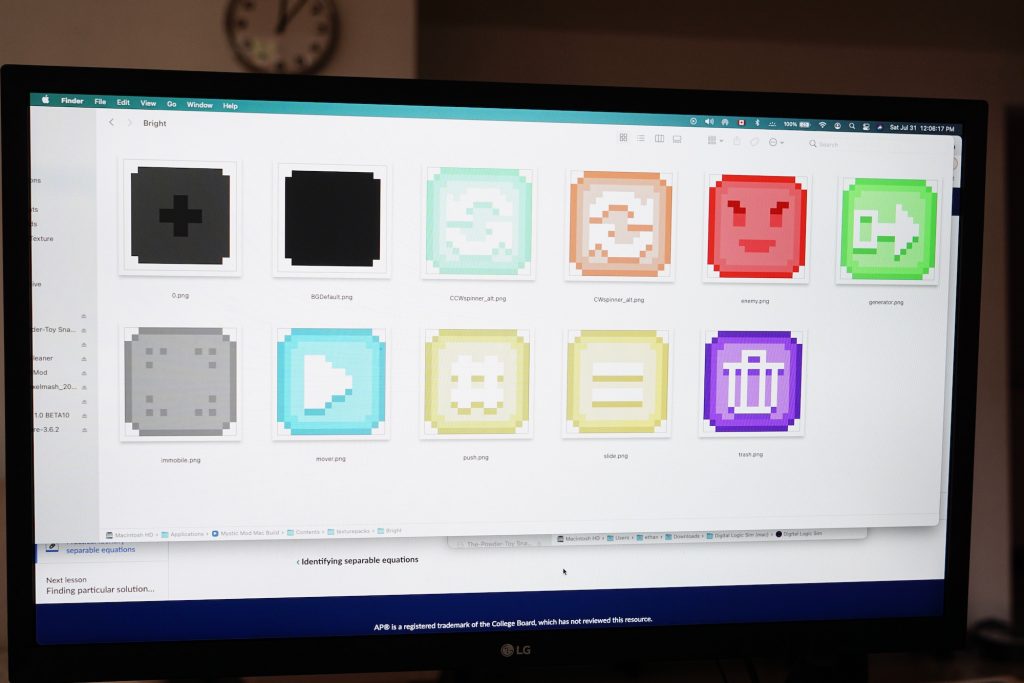
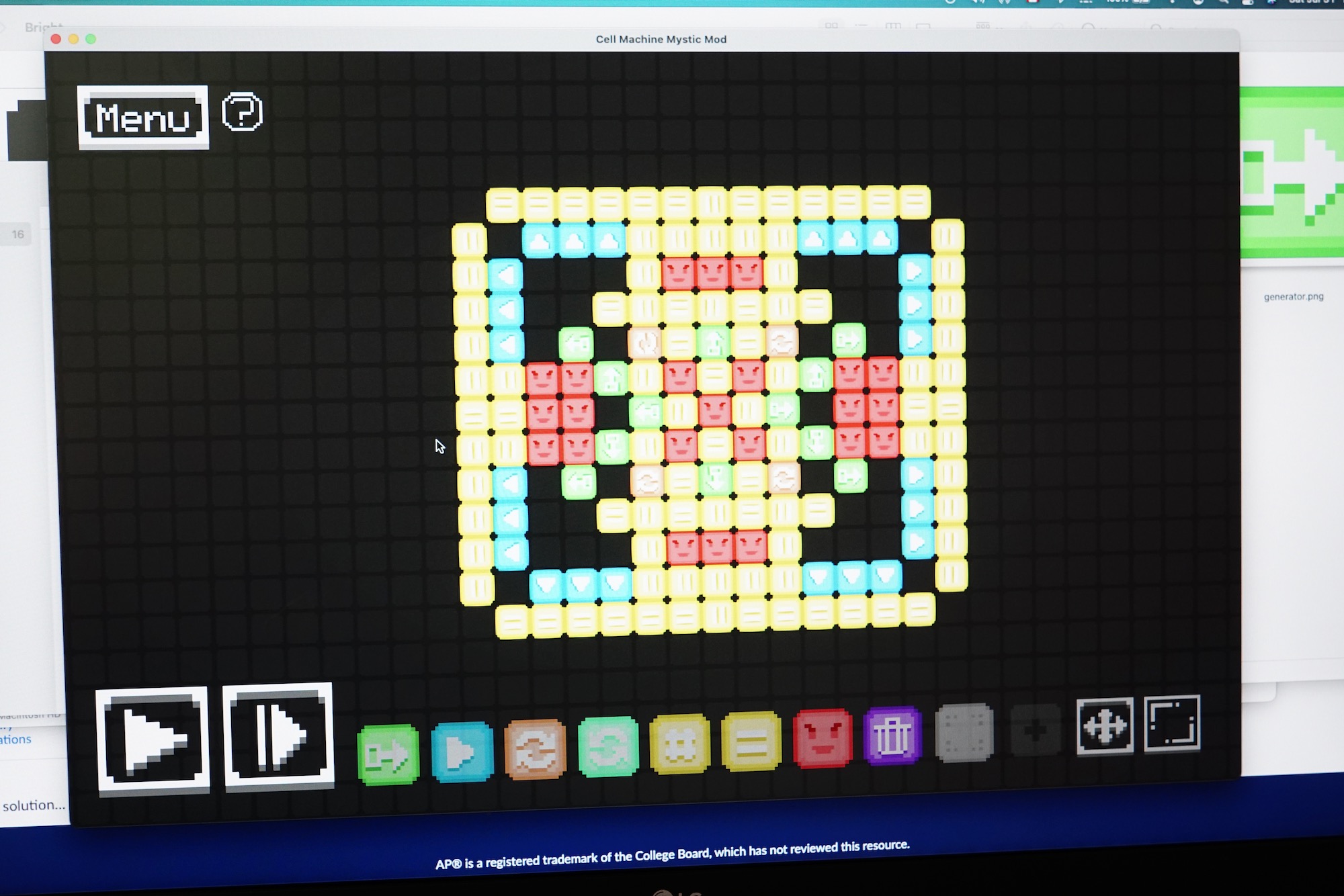
Here is that finished art for Cell Machine! 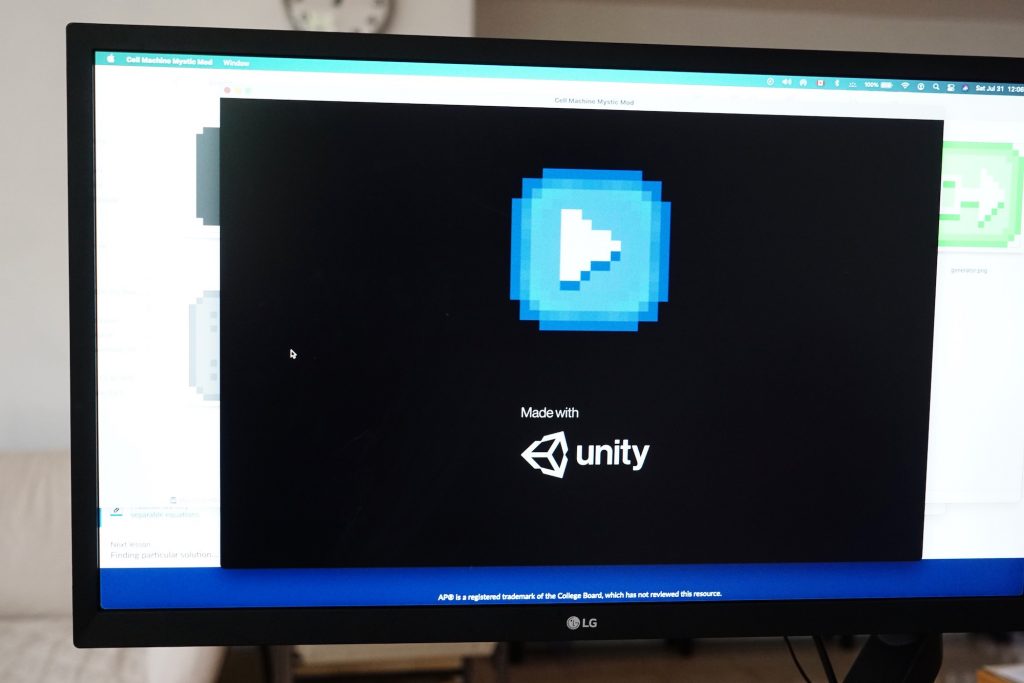
Turns out that Cell Machine was made with Unity. Who knew! 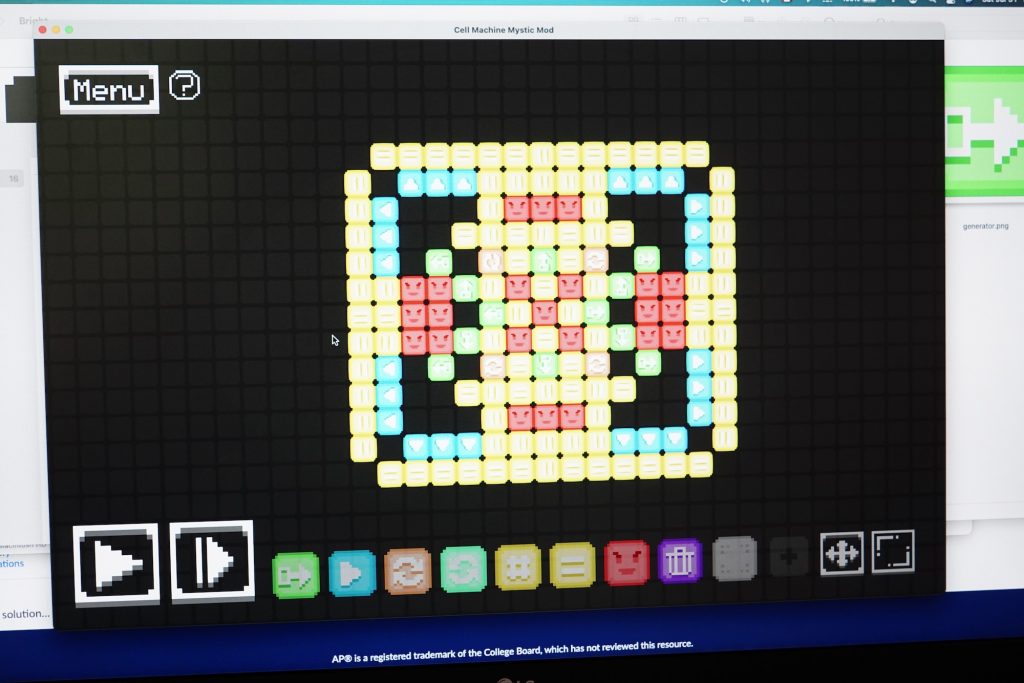
Here is my texture pack being used! 
Tada! 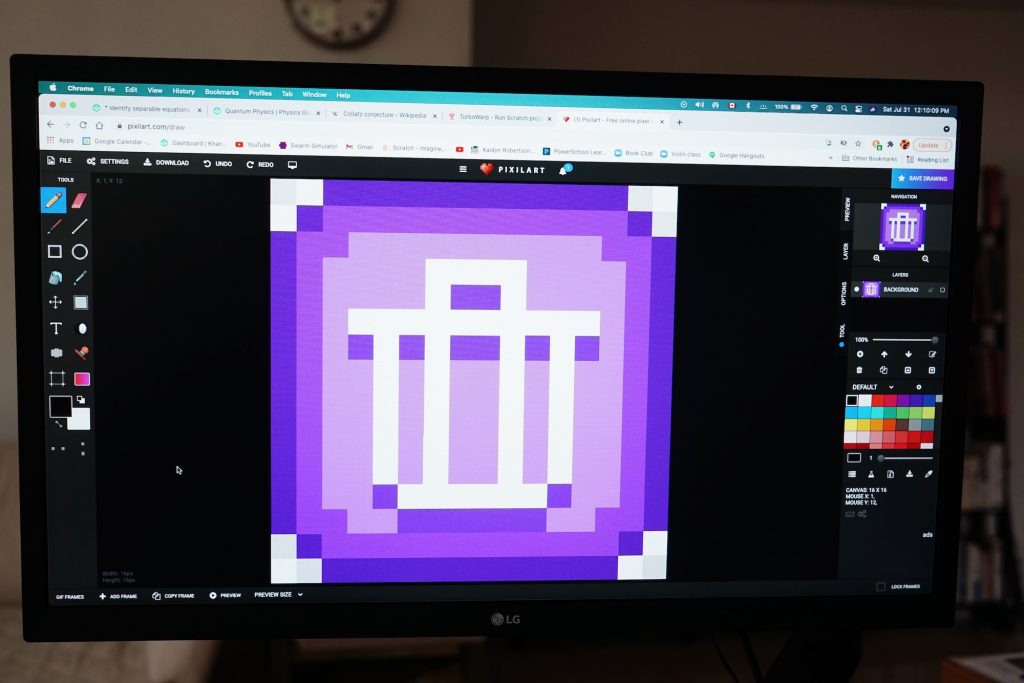
This is the pixel art software I used. It’s called pixilart and it’s a great online drawing tool for making pixel art. See it here: https://www.pixilart.com/ 
I started learning about orbitals, where the electrons, well… orbit around the atoms.
Ok, so they technically just jump around, and the orbitals are the PROBABILITIES of finding an electron there.
This is about quantum physics, but I don’t really get it, so I’m gonna learn it again.
Uhm……………..








Recent Comments